Coordinating Live Dealer Sessions with Encrypted Payment Flows on Mobile Platforms
Written by Clara Long · Jul 15, 2026

Coordinating Live Dealer Sessions with Encrypted Payment Flows on Mobile Platforms
Live dealer sessions on portable devices require continuous video streams that operators must align with transaction ledgers updated in milliseconds, and this coordination involves multiple software layers that handle both visual feeds and financial data simultaneously. Developers build these systems so that player actions at virtual tables trigger immediate checks against account balances while encryption protocols protect each step of the exchange. Research from the International Association of Gaming Regulators shows that platforms now process dealer-initiated events and payment authorizations through shared APIs that reduce latency below 200 milliseconds in most tested environments.
Stream Synchronization and Transaction Triggers
Dealers interact with players through high-definition feeds that stream from studio locations to smartphones and tablets, yet each gesture or card reveal must correspond to backend records that confirm bets and payouts without exposing sensitive information. Systems achieve this by embedding transaction markers directly into video metadata so that software on the device can cross-reference visual events with encrypted ledgers. Observers note that this method prevents desynchronization during peak hours when thousands of sessions run in parallel, and data from regulatory filings indicate that such alignment has improved average session stability across North American and European operators.
Portable devices introduce additional variables because network conditions fluctuate and operating systems apply their own security sandboxes, yet engineers design the software to maintain session continuity by routing payment requests through dedicated channels that operate independently of the video pipeline. When a player places a wager the application sends an encrypted token to the payment processor while the dealer stream continues uninterrupted, and this separation keeps transaction details isolated even if the video connection experiences brief interruptions.
Encryption Layers and Real-Time Verification
Secure transaction processing on handheld devices relies on end-to-end encryption that wraps every financial instruction before it leaves the device, and these same protocols often integrate with player verification systems that confirm identity without interrupting the dealer interaction. According to reports issued by the Alcohol and Gaming Commission of Ontario, operators must demonstrate that encryption keys rotate frequently and that transaction logs remain tamper-evident for audit purposes. The interplay becomes visible when a dealer announces a winning hand and the system simultaneously releases funds through an encrypted channel that the device displays as a confirmation overlay without pausing the table feed.
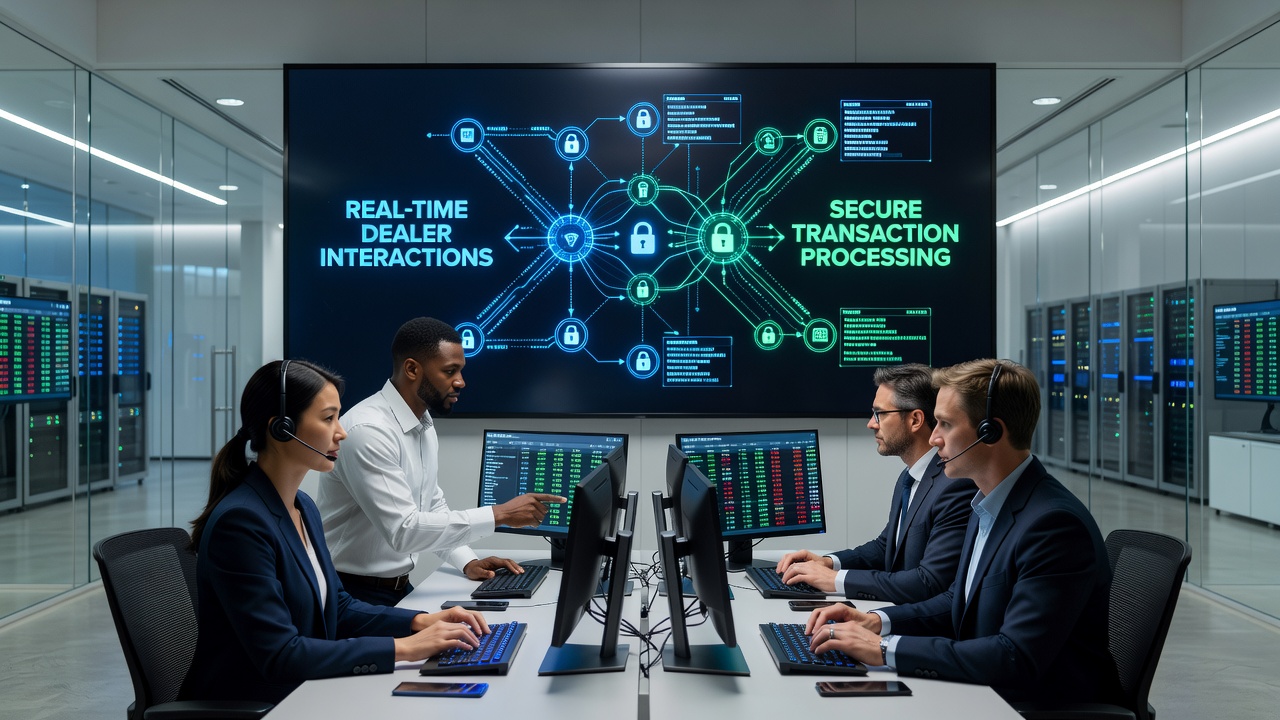
Multi-factor authentication steps occur in the background during active play, allowing the dealer session to continue while the device validates each transfer through biometric or token-based checks. Researchers at the International Gaming Institute have documented that such layered approaches reduce the window for interception attempts, and operators report that verification completion rates exceed 98 percent when these processes run concurrently with video streams. The architecture ensures that any discrepancy between the dealer outcome and the recorded transaction triggers an immediate reconciliation routine that does not require the player to leave the table.
Device-Level Integration and Regulatory Compliance
Operating system updates in July 2026 introduced stricter rules for background network access, forcing developers to refine how mobile applications maintain both dealer connections and payment channels under the same session. Compliance teams now test these configurations against jurisdiction-specific standards that require audit trails for every interaction between visual feeds and financial processors. Figures released by the Australian Communications and Media Authority reveal that platforms adhering to these updated guidelines experienced fewer session interruptions linked to transaction processing delays during the first half of the year.
Hardware security modules embedded in newer portable devices provide additional protection by storing cryptographic keys separately from the main application memory, and this separation allows real-time dealer interactions to proceed while payment instructions undergo independent validation. When a withdrawal request originates during an active table session the system routes it through a secure enclave that confirms the request without exposing the dealer stream to additional data traffic. Experts have observed that this hardware-assisted approach supports higher transaction volumes while preserving the low-latency requirements essential for live play.
Conclusion
Integration between real-time dealer interactions and secure transaction processing on portable devices continues to evolve through coordinated software and hardware measures that keep video streams and financial operations aligned. Regulatory data and industry reports demonstrate measurable improvements in session stability and verification success rates as operators refine these interconnected systems. The result is an environment where players experience continuous table play while each transaction remains protected by multiple encryption and verification layers operating in parallel.